

Telomerase Inhibition
For decades, scientists recognized telomerase as one of cancer’s fundamental survival mechanisms and a compelling therapeutic target. Geron helped translate that scientific understanding into the first clinically validated telomerase inhibitor, demonstrating the potential of this approach in blood cancers.
the role of telomeres
Cells aren’t meant to live forever
Every day, millions of cells divide to replace worn-out or damaged tissue. But healthy cells are not designed to divide indefinitely. Limiting how many times a cell can divide helps protect the body by reducing the accumulation of DNA damage and genetic instability.
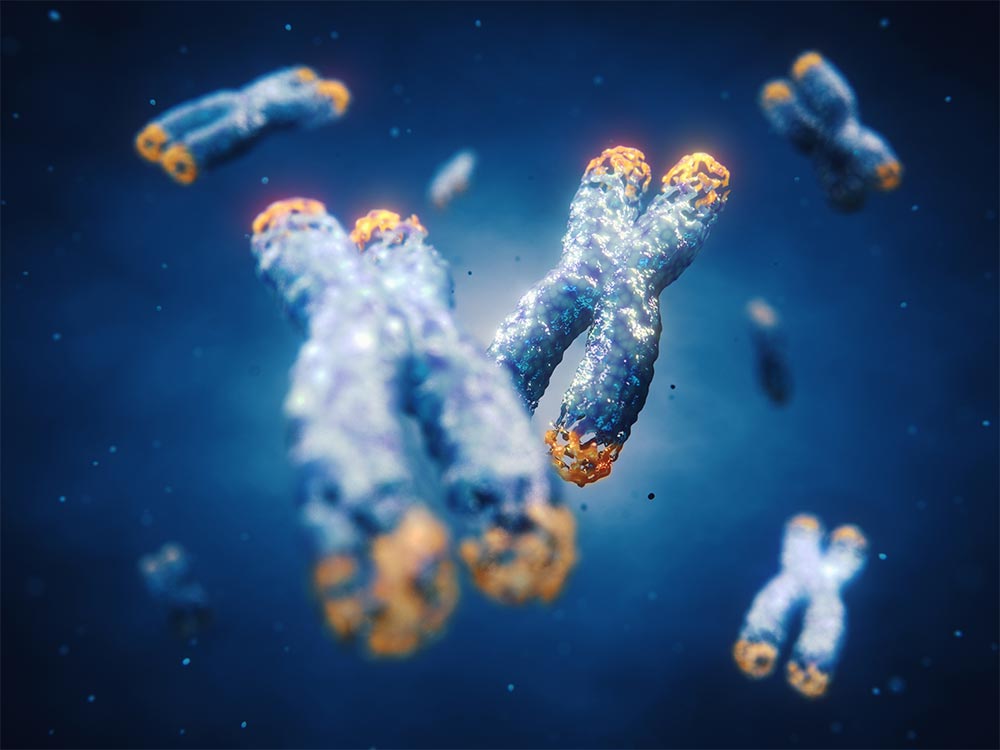
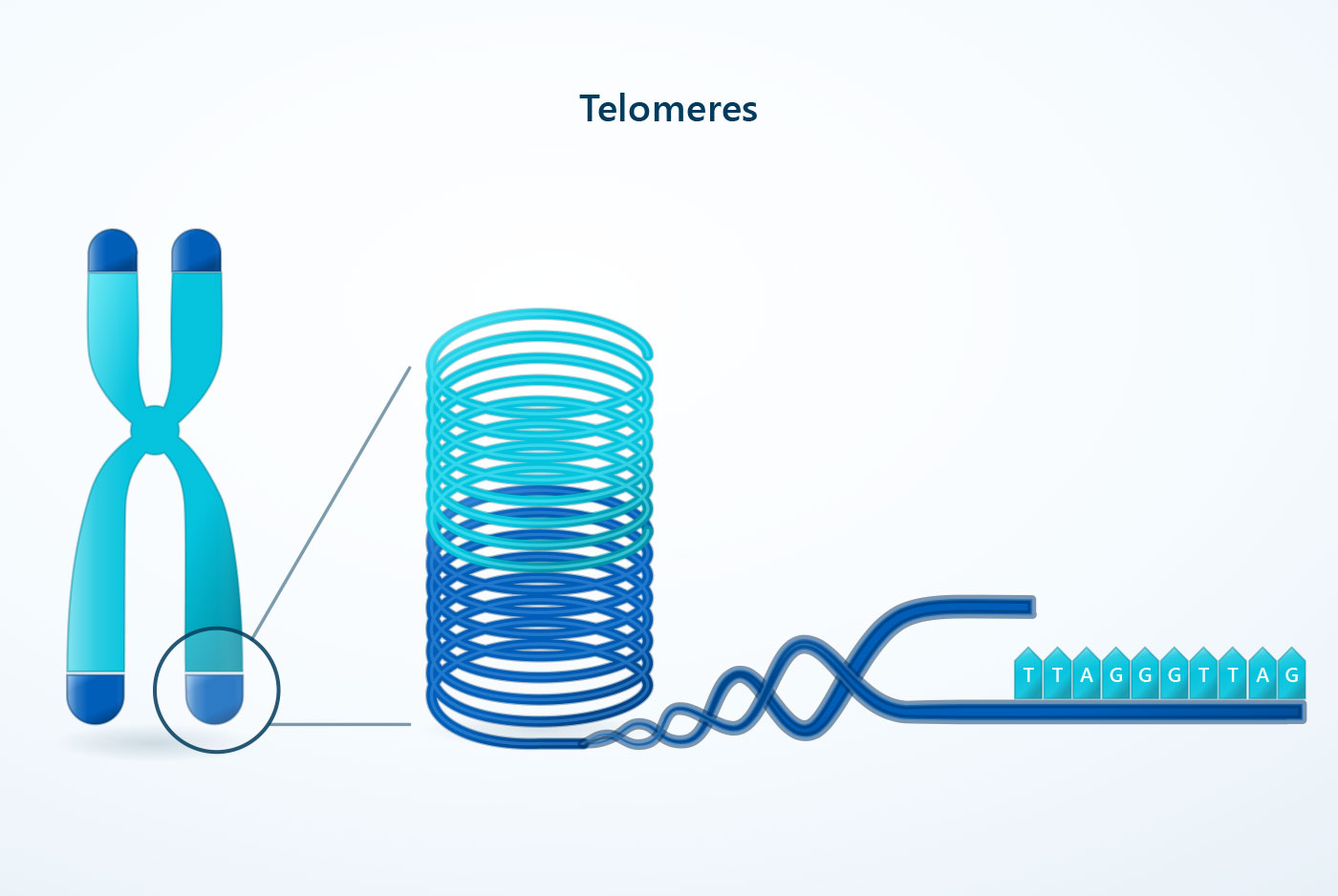
At the ends of every chromosome are telomeres — repeating stretches of DNA that protect chromosomes during cell division. Much like the plastic tips on the ends of shoelaces prevent the laces from fraying, telomeres help protect chromosomes from becoming damaged when cells divide. They also serve as a kind of biological clock, gradually shortening with every round of cell division.
Eventually, telomeres become too short to adequately protect the chromosome. When this happens, the cell reaches the end of its lifespan and either stops dividing or undergoes programmed cell death (apoptosis).
introducing telomerase
Some cells need more time
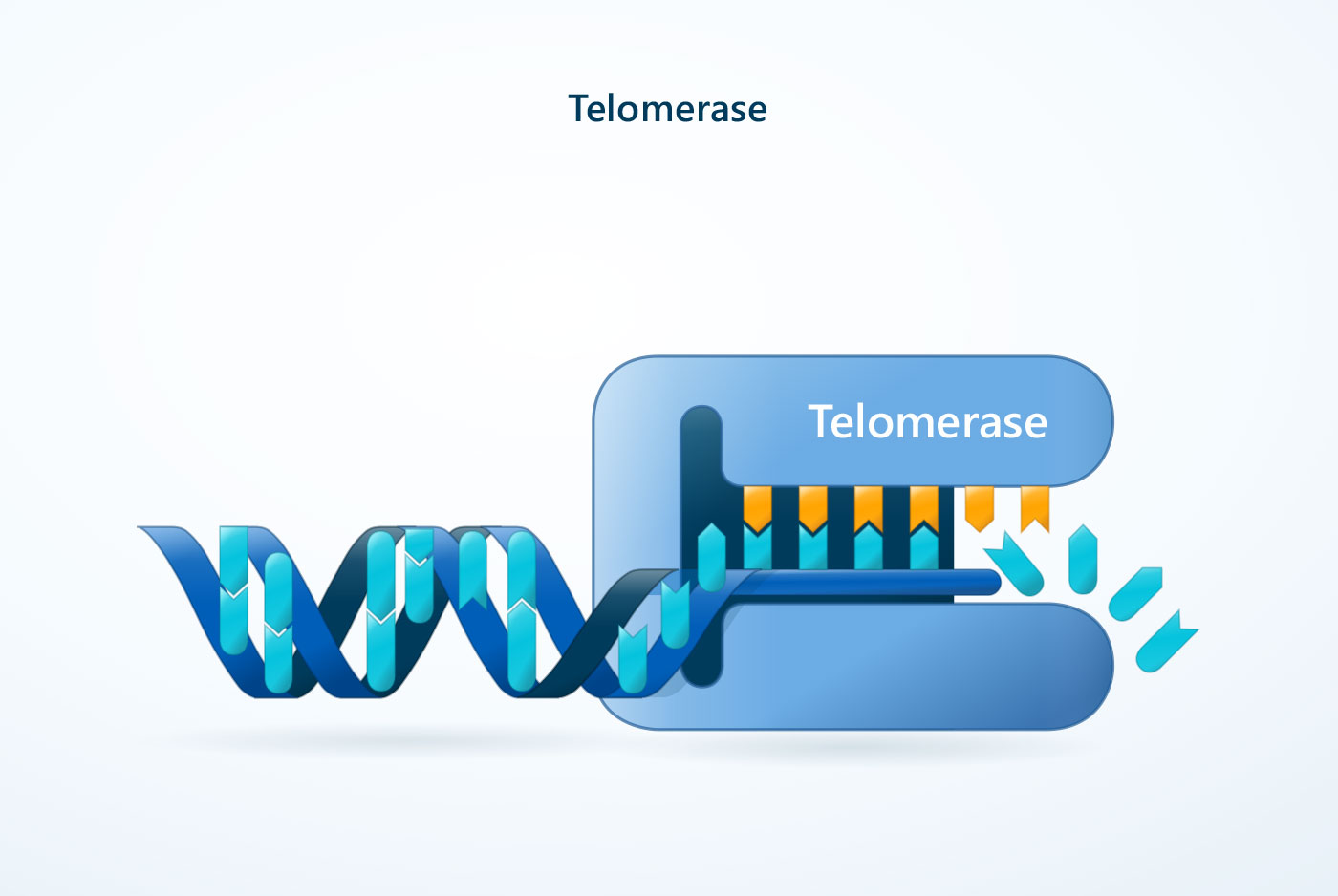
Certain specialized cells — including blood-forming stem cells, immune cells, and reproductive cells — must divide more frequently to support normal body function. To do this they activate telomerase, an enzyme that helps maintain telomeres by adding DNA back to their ends, allowing these cells to continue dividing when needed. Telomerase activity is tightly regulated, and most healthy cells do not express it.
telomerase and cancer
When cancer breaks the clock
Cancer cells have one ultimate goal — survival through proliferation.
To accomplish this, many cancers persistently activate telomerase, allowing them to continually rebuild their telomeres and effectively become immortal. Approximately 85% of human cancers are estimated to express telomerase, making it a common denominator across many cancer types.
our approach
Imetelstat: stripping cancer cells of their immortality
For decades, scientists recognized telomerase as one of cancer’s most compelling therapeutic targets. Translating that biology into an effective therapy, however, proved extraordinarily challenging.
Persistence turned possibility into reality
Geron remained committed to that pursuit, combining scientific conviction, persistence, and deep hematology expertise to help validate telomerase inhibition as a therapeutic approach and bring the first and only approved telomerase inhibitor, imetelstat, to certain adults with lower-risk myelodysplastic syndromes (LR-MDS).
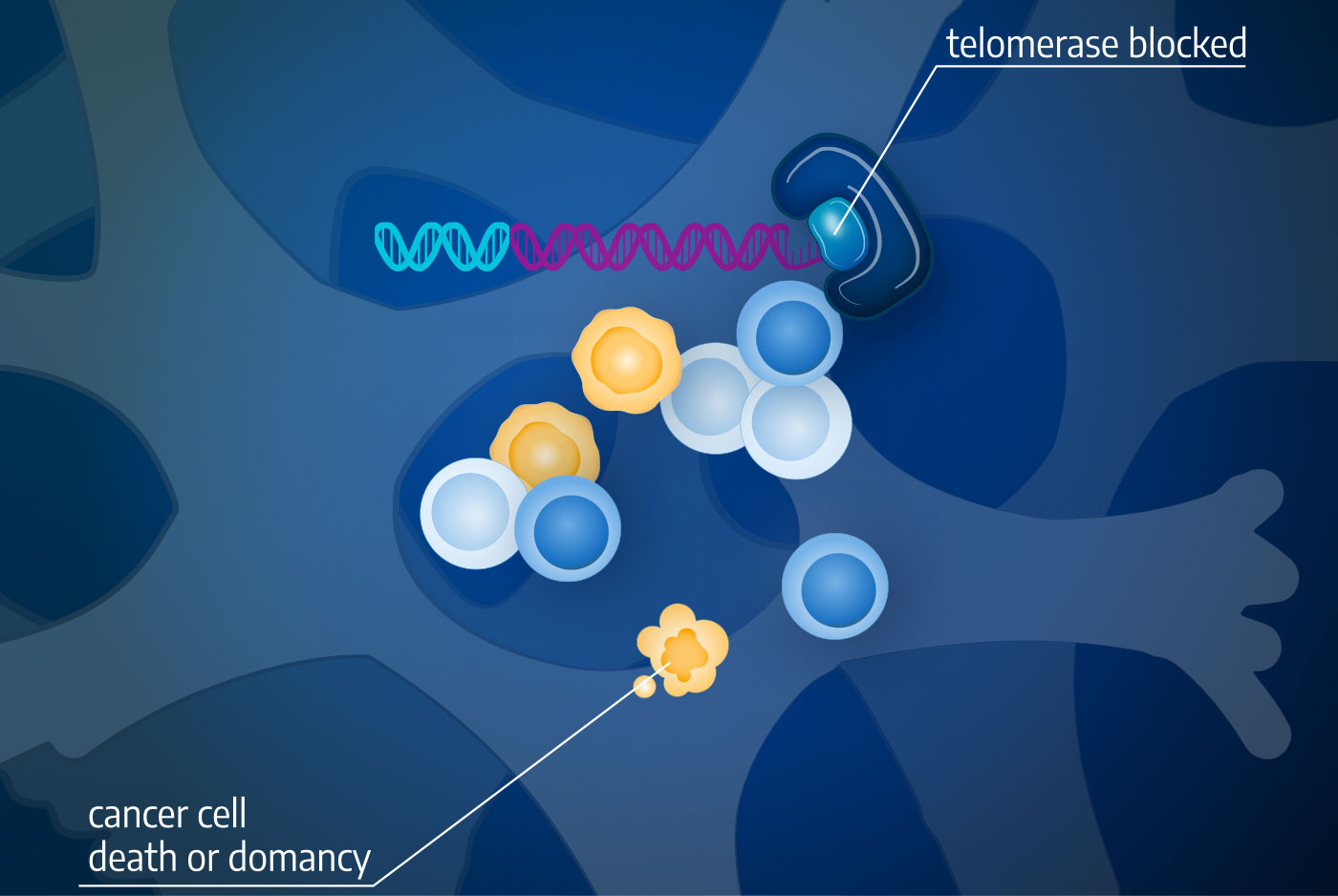
Imetelstat is a first-in-class oligonucleotide that directly binds to the RNA template in telomerase. By inhibiting telomerase activity, imetelstat is designed to prevent the continued maintenance of telomeres, limiting the ability of cancer cells to continue dividing and potentially leading to cell death.

building on a proven foundation
Building on a proven foundation
Today, Geron continues to build on decades of telomerase research, deepening our understanding of telomerase inhibition in lower-risk MDS (LR-MDS) and exploring its potential in myelofibrosis (MF) and other blood cancers where significant unmet needs remain.