


Myelofibrosis (MF)
understanding the disease process and progression
What is MF?
MF is a rare blood cancer that begins when cell growth signaling pathways are overactivated, usually by an acquired mutation, causing abnormal cells to multiply uncontrollably. The impact of this is most evident in the bone marrow, the soft, spongy tissue inside bones where blood cells are made. In MF, abnormal blood-forming stem cells cause scar tissue (fibrosis) to build up in the bone marrow. As the bone marrow becomes increasingly scarred, it becomes less able to produce healthy blood cells, leading to anemia, fatigue, and other complications.
MF more commonly affects older adults, with most people diagnosed after age 60. It may develop on its own, in people with no prior history of blood disorders (primary MF), or evolve from other blood disorders such as polycythemia vera (PV) or essential thrombocythemia (ET).



beyond the diagnosis
The reality of living with MF
The disease burden
MF is a chronic, progressive blood cancer. While symptoms vary from person to person, the disease affects many aspects of everyday life. Waiting for test results, wondering whether symptoms will worsen, and adjusting to changes in treatment can also potentially create ongoing uncertainty for both patients and their care partners.

Fatigue
Often one of the most common and debilitating symptoms. Many people find themselves planning their day around their energy levels or needing more time to recover after routine activities.
Enlarged spleen
An enlarged spleen can cause discomfort, pain beneath the ribs, bloating, and feeling full after eating only small meals.
Night sweats and fever
Persistent inflammation may cause drenching night sweats or unexplained fevers that interfere with sleep and daily routines.
Bone pain
Changes within the bone marrow may contribute to persistent bone or joint pain.
Itching
Severe itching can interfere with sleep and daily activities.
Weight loss and reduced appetite
Feeling full quickly or losing weight unintentionally can make maintaining strength more difficult.
Symptoms that shape everyday life
beyond symptom management
A different way of approaching MF
Current therapies have improved care for many people living with MF, but some patients eventually experience worsening symptoms or disease progression despite treatment. This ongoing unmet need underscores the importance of continuing to explore new approaches that may address the disease in different ways.
Geron is investigating whether targeting telomerase may help address an underlying disease mechanism involved in the growth and survival of malignant cells.
-

What is telomerase?
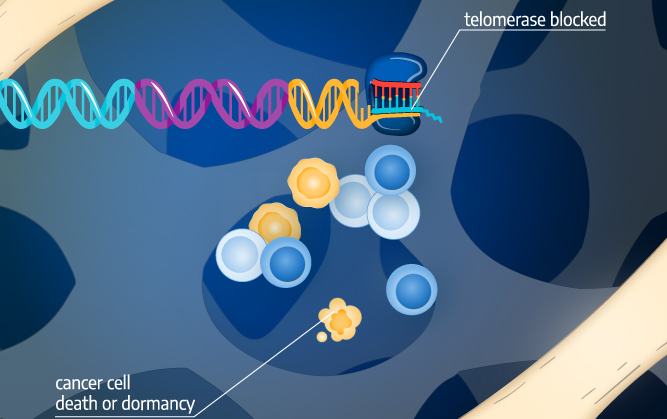
Telomerase is an enzyme that helps certain cells continue to divide. Each time a cell divides, the end caps of DNA (telomeres) become slightly shorter. Over time, the chromosomes become damaged and the cells die. Telomerase helps keep this from happening. Cancer cells usually have more telomerase than most normal cells. Because of this, telomerase has become an important focus in blood cancer research, including diseases like MF.
-
How is this different from other approaches?
Many current therapies for MF are designed to help manage symptoms. Telomerase inhibition is being studied as a different approach, targeting a key process that many cancer cells rely on to continue dividing. By limiting telomerase activity, researchers are exploring its potential role in affecting malignant cells and the underlying biology of the disease.
Current progress
Through ongoing clinical research, we are evaluating the potential of telomerase inhibition in myelofibrosis. Geron has several ongoing clinical trials in MF, including a Phase 3 clinical trial evaluating our telomerase inhibitor, imetelstat, in adults with relapsed or refractory myelofibrosis (R/R MF) whose disease has progressed after treatment with a JAK inhibitor.
beyond the medicines
Exploring opportunities to support the MF community
Our commitment to the blood cancer community extends beyond science. We are exploring opportunities to partner with patient and professional organizations on initiatives that advance education, raise awareness, and build meaningful connections across the MF community. By listening to and learning from people impacted by MF, we hope to better understand the needs of patients and care partners and identify meaningful ways to support the community.
Patient and Professional Advocacy Organizations
Patient and professional advocacy organizations can be important sources of trusted information, educational resources, and community support for people living with MF and their care partners.